How to wash and block your hand-knits
Why and how to do it, from A to Z.

When you have finished knitting, there are two steps left: washing and then blocking. This is the process in which your hand-knitted woollen garment truly comes into its own and gets a finished look. The stitches straighten out and become more even, and the wool opens up.
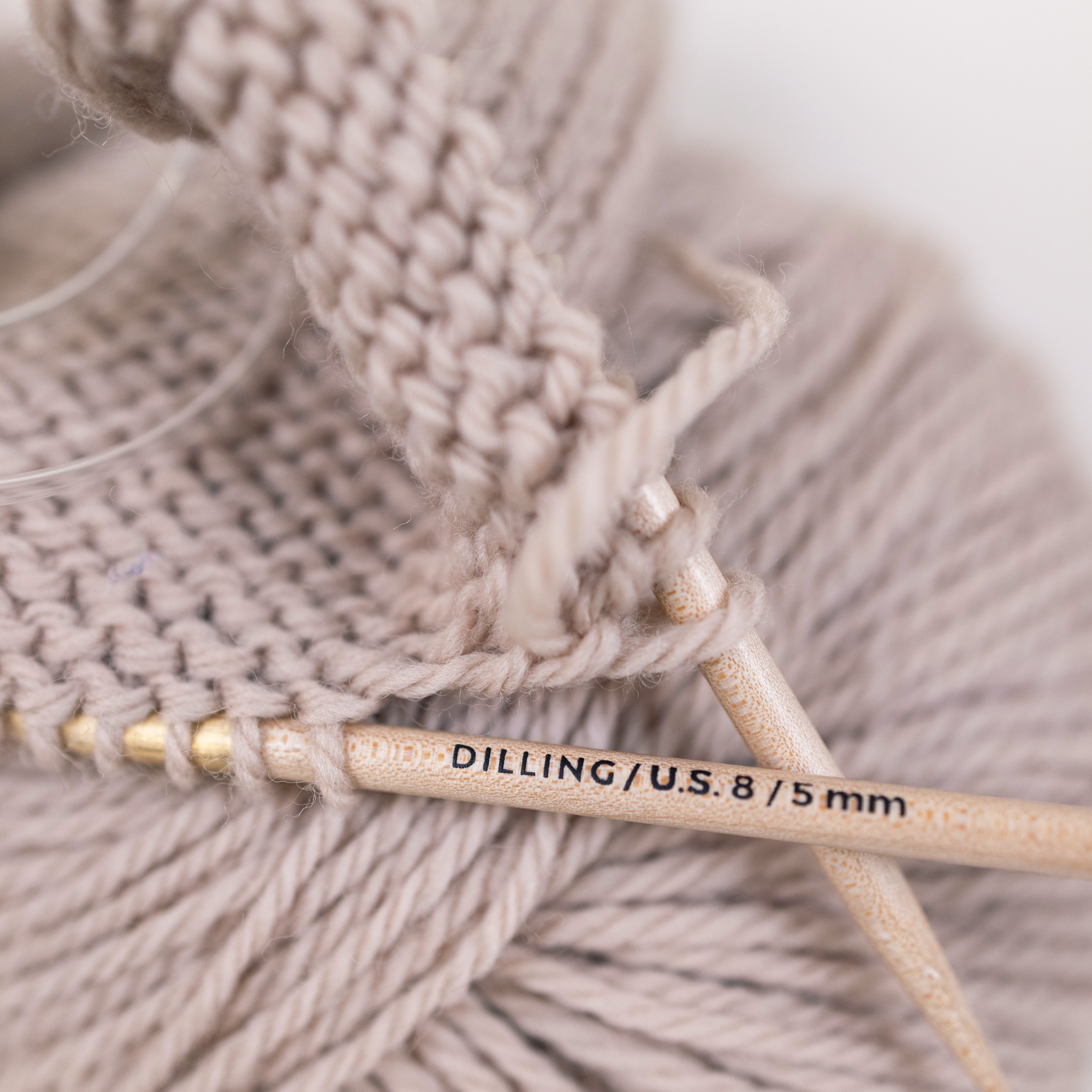
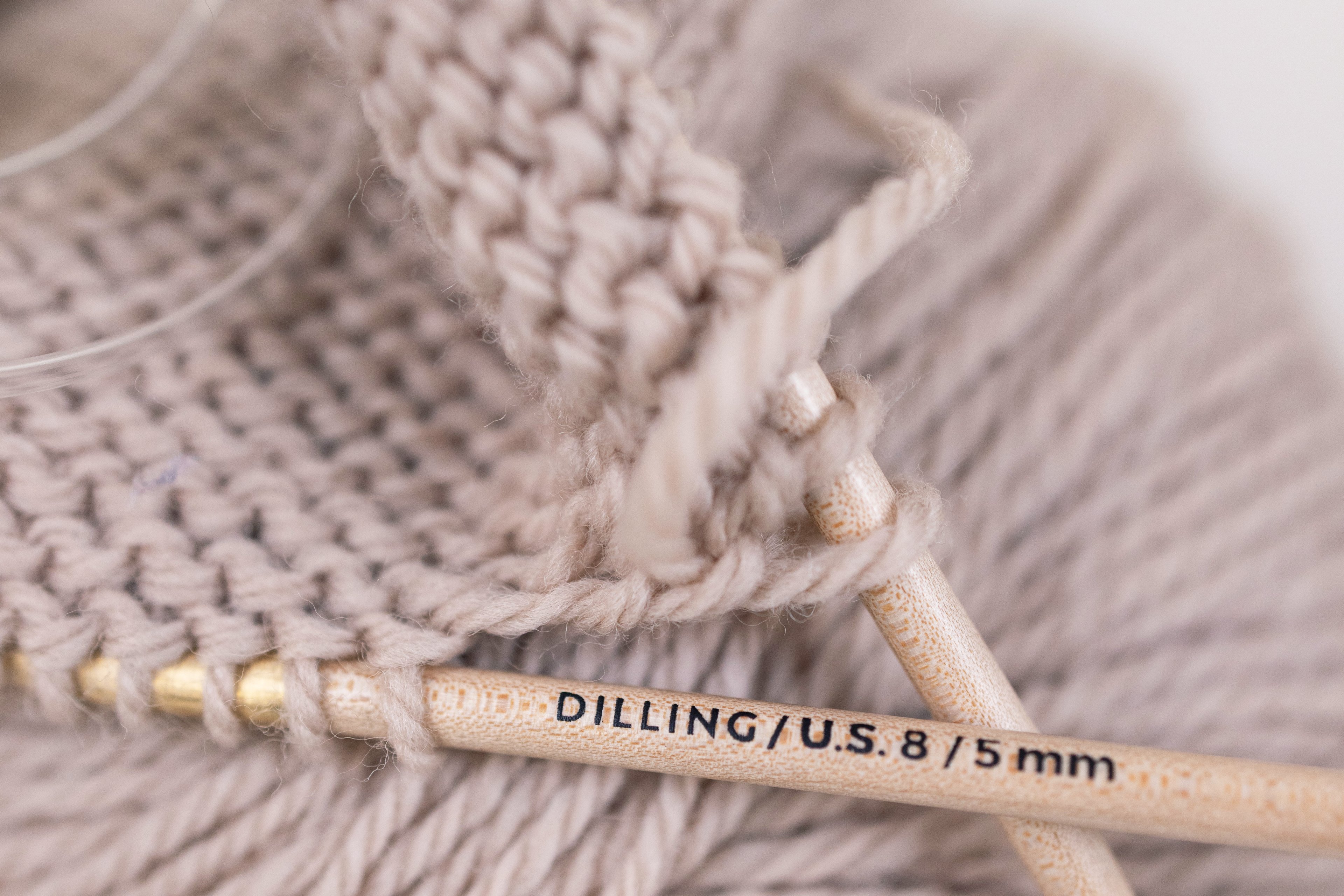
What is blocking – and why do we do it?
Washing and blocking are the last important steps before you can call your knitting project finished. You gently wash the knitting by hand, shape it on a flat surface to the measurements in the pattern and leave it to dry flat there.
When you block wool knitting, you will notice that unevenness and small mistakes even out. The wool settles into place, so to speak, and looks more finished. Do the edges of your knitting curl and roll up, for example? That is exactly what blocking helps with.
If the yarn is dyed, any excess dye will also be washed out at this stage.
Before you begin
There are a few things you need to have at hand before you start:
- A basin or bowl – depending on the size of the project
- Wool wash
- A couple of large towels
- A tape measure and the measurements from the pattern
- A soft surface – foam mats or a towel
- Blocking pins or dressmaking pins – always use stainless steel pins
Step-by-step guide to washing and blocking
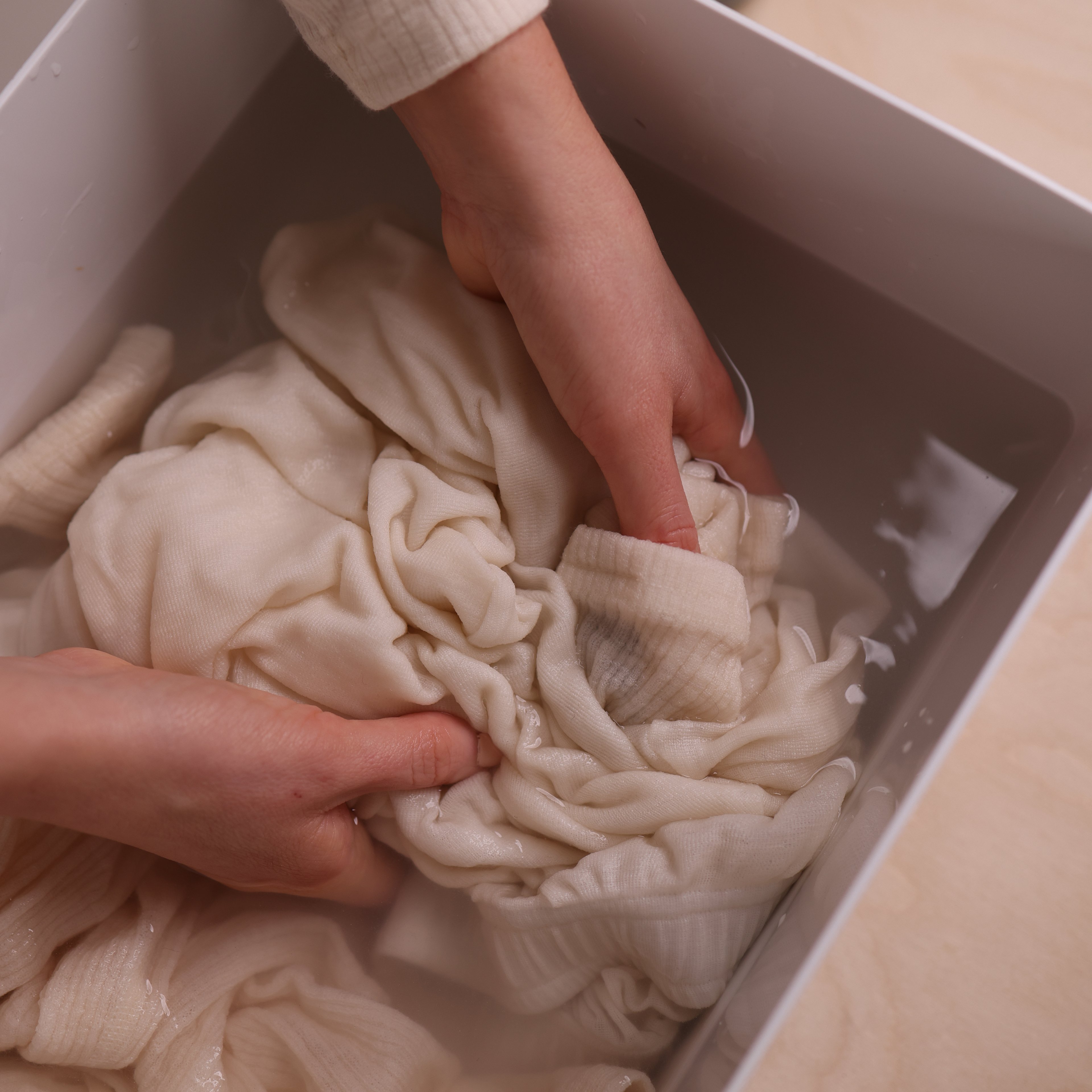
- Fill a basin with lukewarm water (max. 30°C) and add a little wool wash. Place the knitting in the water for a few minutes. Do not leave the wool to soak for longer than that.
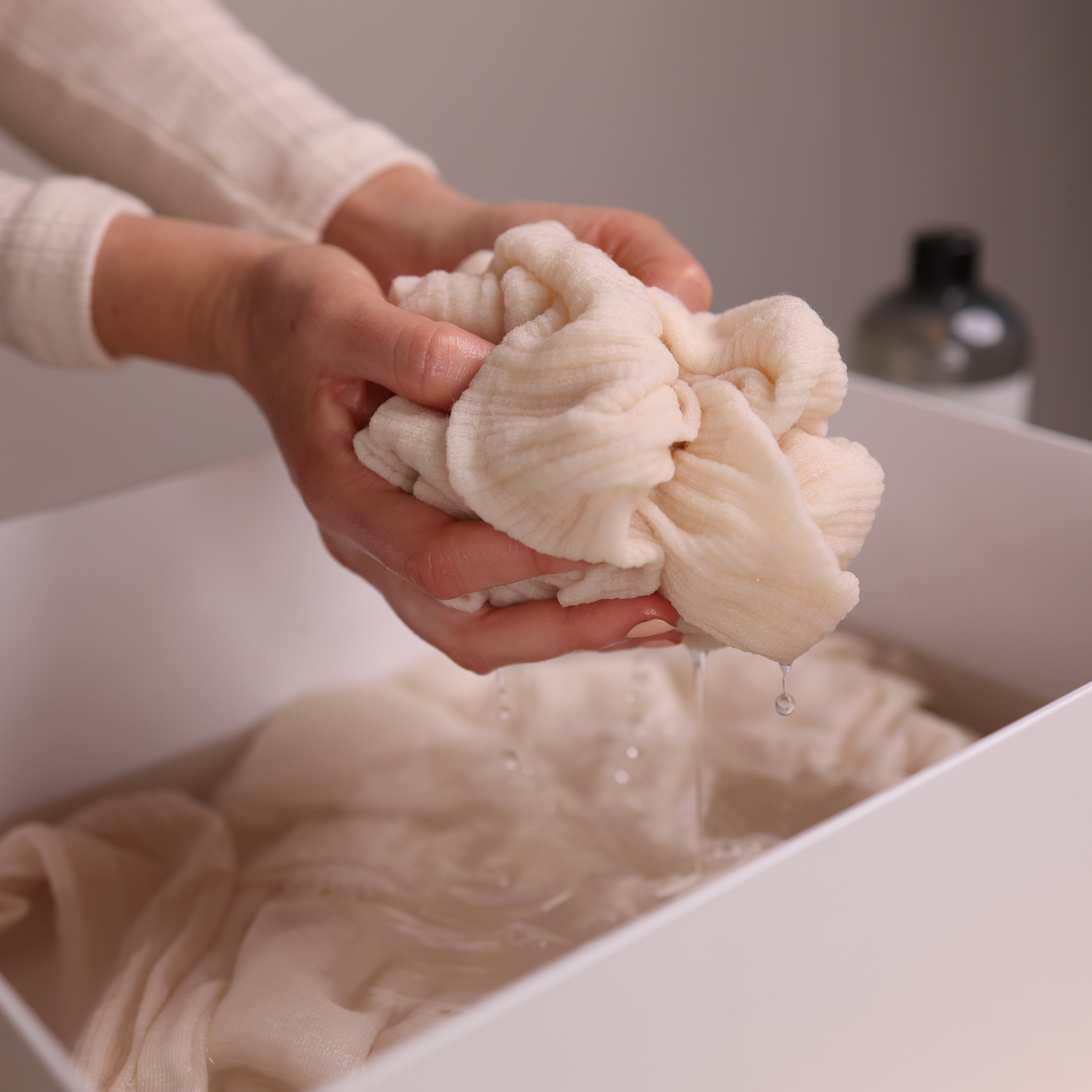
- Pour out the water and replace it with clean water without soap. Watch the temperature. Repeat a couple of times if necessary to get all the soap out of the knitting. Be careful not to pull, stretch or wring your knitting. Instead, squeeze and press the water out, and lift it carefully out of the basin.
- To remove the last of the excess water, you can either use a spin without rinsing in the washing machine at 600-800 rpm, or press or roll the knitting flat between two towels. Wool felts easily, so be careful not to wring it.
- Now lay the knitting flat on a dry towel or a foam mat. Wet knitting is very elastic, so this is where you use your tape measure and the measurements given in the pattern.
- Shape your knitted project so that it matches the measurements you knitted to, and so that it lies neatly and evenly. Check the length and width, and gently pull your knitting until it has the right shape.
- Sometimes you may need to use pins to hold the knitting in shape. This is typically the case with lace patterns, cables and the like. Here you need a foam mat as a base.
- Leave the knitting in this shape until the work is completely dry – it may take a little patience, but it is well worth it.
Common mistakes you can easily avoid
We have all made the same mistakes and ended up with a felted woollen jumper. And when that happens, there is unfortunately nothing to be done. Here are the most common mistakes, so that you hopefully avoid wasted work:
- Water that is too hot. Wool can easily shrink and felt if the water is too hot. Merino wool yarn without Superwash in particular does not tolerate high washing temperatures.
- Rough handling. Avoid wringing the knitting. Instead, press and squeeze the water out of the wet knitting.
- Spinning too hard. Avoid spinning at too high a speed (no higher than 800 rpm). Wool can felt with movement, and the higher the speed, the greater the risk.
- Hanging wool to dry. Wet wool is heavy and stretches. Let it dry flat on a dry towel.
- Pins that rust. Always use stainless steel dressmaking pins or blocking pins for the blocking itself.
- Removing the knitting too soon. Let the knitting dry completely before you take the pins out. It may take time but it is worth the wait.
- A quick turn in the tumble dryer. Never use the tumble dryer. The heat makes the natural fibres shrink and felt, and the friction is more than the wool can take.

How to care for your hand-knits from now on
Your woollen garments actually need less care than you might think. In many cases you can skip washing altogether and simply hang them out to air overnight. That is often enough to remove unwanted odours and give a “freshly washed” feel.
When it is time to wash your hand-knits, you can read our recommendations in our guide to caring for your hand-knits.
Explore more